
A featured contribution from Leadership Perspectives: a curated forum reserved for leaders nominated by our subscribers and vetted by the Construction Tech Review Advisory Board.

Head of IP for Innovators at World Intellectual Property Organization (WIPO)
Understanding and Tackling the Intricacies of IP Management
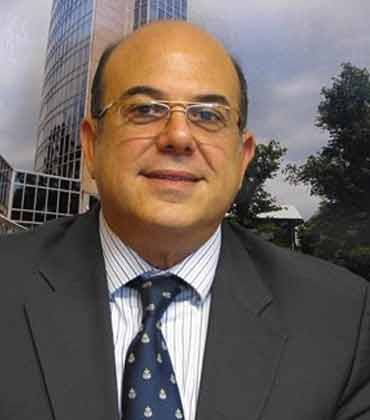
Alejandro Roca Campana has managed intellectual property (IP) in Latin America and the Caribbean for over 30 years. Roca Campana spent 12 years in the innovation and knowledge infrastructure department of the World Intellectual Property Organization (WIPO), a global organization and specialized agency of the UN system dealing with IP. He is currently the head of IP for innovators, primarily responsible for assisting WIPO’s 193 member states, universities, research and development centers, and smaller and medium-sized enterprises with local innovation support.
In an interview with CIOApplications Europe, Roca Campana elaborates on IP management, its benefits, and its features. He also highlights the technologies and tools that are facilitating IP management.
Can you give an elaborate idea of your intellectual property management of innovations?
Intellectual property is a legal document that ensures that a person’s intellectual capital can be integrated into products and services with no right for others to replicate, which can be commercialized for the benefit of society. Economic players prioritize intellectual property due to protection against potential infringements.
Our intellectual property management is mainly about helping universities and research centers develop an innovative ecosystem, access intellectual property rights, and learn from patents, scientific and technical literature, and databases to commercialize their products and services. A pivotal aspect of our work is national, regional, and virtual networking to enhance knowledge sharing. We provide thought leadership and global coordination, especially in robust technology transfer collaborations, notably patent analytics. Our resources, tools, and platforms enable active local innovation support to universities and research centers.
IP enables commercialization and returns on investments. Industrial property involves patents, trademarks, designs, models, and copyright that covers artistic and literary works. We aim to advance this integration. In 2010, WIPO endorsed 45 recommendations to incorporate IP into development agendas, aiding developing countries' access through technology and innovation support centers.
There are various crucial aspects and concepts of IP management. One of the most important concepts is understanding how to handle information that enters a public domain with access to everyone due to expired exclusive rights or trademarks. The life of a patent is 20 years from filing, and then it enters the public domain. It happens if the patent is undefended or unpublished in a specific country. For instance, if a property is safeguarded in Argentina, it does not mean it is sufficient to protect it globally. You must register in those regions to secure an invention for Europe, Japan, or the US. While commercializing unprotected IP in its local market is possible, exporting to protected markets is restricted.
Another vital aspect is balancing private and public interests, which is the balance between owners and society. Owners must publish the patent information 18 months after filing the patent to foster societal awareness by allowing the patent to be the basis of further research by other experts.
Public health is a domain that significantly benefits from this. By timely publication of discoveries on medicines and vaccines, the filer can gain exclusive rights on the intellectual property to hinder commercial exploitation while helping others to apply the invention in their research studies.
Can you discuss some critical elements for achieving a successful IP management process?
Patent analytics, which involves scrutinizing the patent literature to identify the technology trends, is a significant part of the IP management process. Our organization aids in patent analysis by mapping certain technological landscapes. This is vital since public institutions, including universities, often overlook existing IPs, leading to redundant research. We foster effective IP use, transfer knowledge to utilize this essential aspect of the patent system, and aid nations in harnessing the value of patent information. Simply Googling a few terms won't suffice for effective searches. The patent system's intricacies need scrutiny due to patent system nuances.
Certain patent rules need to be considered as well. The Paris Convention and the TRIPS Agreement are two of the most important regulations. The TRIPS Agreement handles the trade-related aspects of intellectual property, that is, transferring research into marketable products.
Technology innovation support centers have increased globally since 2010, encompassing 90 participating countries. In one country, there can be many centers in as many universities as they have. These centers guide the organization’s innovation stakeholders by overseeing the process from ideation to market integration. Our organization engages in capacity building and training to facilitate this while managing vital public-private collaborations. We partner with scientific and technical literature publishers and database vendors to establish a private-publish alliance and provide no-cost or low-cost access to this information for developing countries. This is extremely useful when major publications like Oxford University Press sometimes cost up to $40, and regular access to some articles can even reach $300.
What are some of the technologies and tools that are facilitating the process?
We operate a public patent information platform called PATENTSCOPE with over 130 million patent documents from government patent offices that are publicly accessible free of charge. To understand its functionality, visit the PATENTSCOPE database website in various languages, including English.
There are also automated tools to assist people from different countries navigate these databases, as each patent office publishes in its own language. By automatically translating Chinese or Japanese literature to Western languages, people do not miss out on globally produced valuable resources. WIPO’s role in this regard is the creation of translation tools, many of which leverage artificial intelligence, particularly neural networks. These tools facilitate translating documents from languages like Chinese, Korean, and Japanese into English, French, Spanish, and even Russian.
Owners must publish the patent information 18 months after filing the patent to foster societal awareness by allowing the patent to be the basis of further research by other experts.
We offer a world brand database with information on trademarks and one on industrial designs so people can protect the external appearance and structure of objects or devices using intellectual property rights. We have also developed two crucial tools to aid people in validating patent information. They focus on information identification, considering various angles and exceptions, and determining people’s ability to function within a specific market without infringement. A prominent example showcasing the need for such tools is the Samsung and Apple case involving touch technology. The legal battle spanned years, highlighting the importance of avoiding violating others' rights to technology. Incorporating this consideration into the design and development phases is essential to prevent economic losses upon product launch.
What is your advice to your peers and colleagues to nurture a successful career in the intellectual property field?
My advice for young entrepreneurs and researchers is to stay educated on intellectual property rights and every aspect of IP management, including how to prosecute some patents and how to find information.
Most technology or inventions are built on the principle of cumulative knowledge by using what has been invented before to add extra layers and details. Given that research and development funds are very scarce, a study can be done by consulting patent information rather than starting fresh, saving time and money.
Before commencing the procedures, review the available information. Consult an IP attorney, as many universities offer IP departments or innovation support for navigating these matters.
University research often starts at low technology readiness levels three to four but eventually needs to progress to levels eight to nine for market entry. WIPO provides valuable distance learning resources and access to specialized professionals to navigate through these intricate issues.

